
صحافة الكترونية مرخصة وزارة الاعلام ترخيص رقم 366-2019

صحافة الكترونية مرخصة وزارة الاعلام ترخيص رقم 366-2019
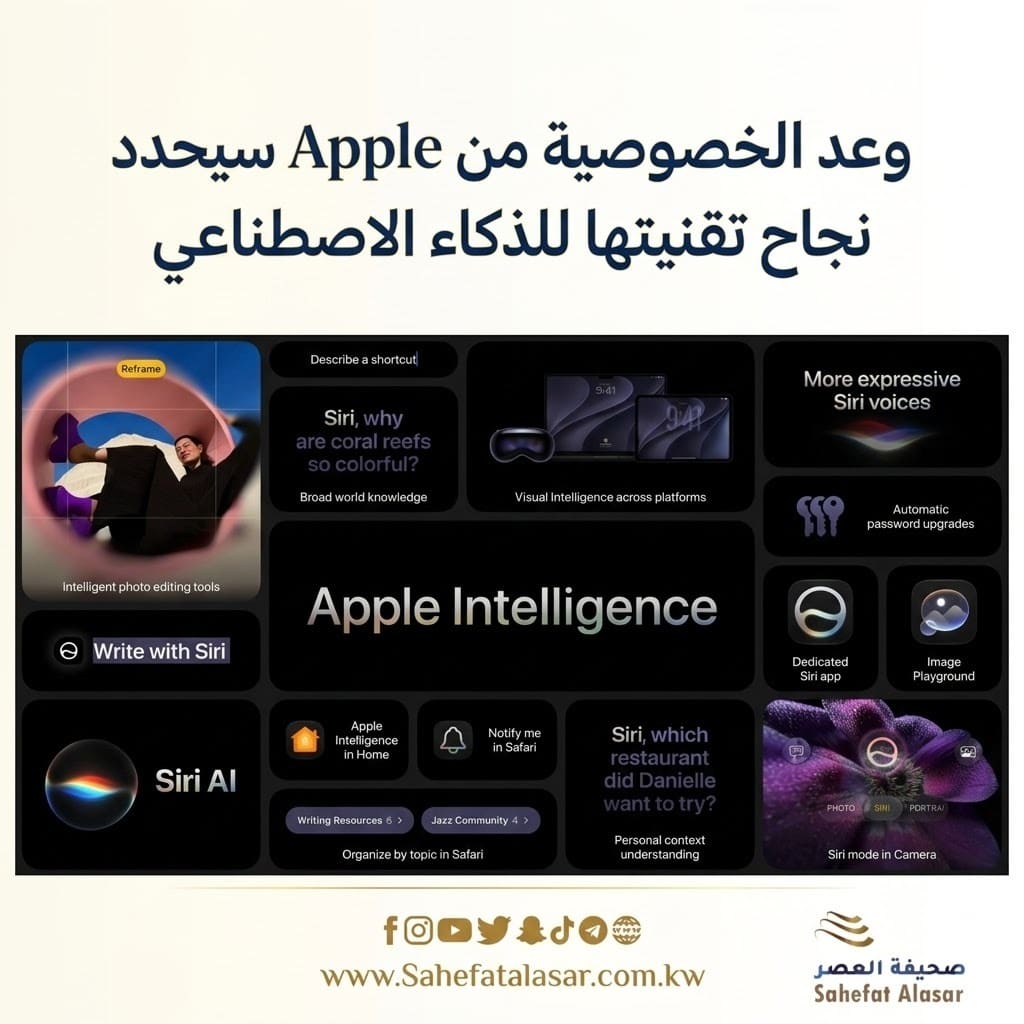
Apple says its cloud data processing is as private as on-device processing, even though it now runs on Google's servers.
As expected, yesterday's WWDC conference was primarily about artificial intelligence. And, also as expected, Apple tried to turn its lag in this area into a strength in its presentation: it didn't rush into AI because it was taking its time to get things right. In this case, "right" means "with greater privacy than anyone else." It's a good presentation, but the question is how effective it will prove.
The new Apple Intelligence features and Siri AI update are designed to work across iPhones, iPads, Macs, Apple Watches, and Vision Pros. There’s a dedicated Siri AI app, a ChatGPT-like chat experience, new AI-powered photo and camera editing features, and the beginnings of an intelligent agent experience that lets Siri AI interact with other apps and software on your iPhone, iPad, or Mac.
Regardless of the device you use the new AI on, Apple says the processing will be nearly identical: Queries will be handled on the device when possible, and in the secure Private Cloud Compute when not. Apple assures that your data will not be stored, will only be used to fulfill your request, and will not be accessible to Apple or any other party. Conversation logs in the new Siri AI app will be stored only on the device and in your fully encrypted iCloud account.
This architecture isn’t entirely new; Private Cloud Compute was announced alongside the initial Apple Intelligence launch in 2024. But two years later, two things have changed. First, Apple is clearly lagging behind most of its AI competitors, even after yesterday's announcements. This makes its privacy offering more important than ever as a way to differentiate itself. The second change is what complicates matters further: because of this lag, Apple has now begun partnering with Google and Nvidia to power its AI operations.
Instead of being entirely built in-house, Apple's new cloud AI models are now built on Google's Gemini. Meanwhile, Private Cloud Compute is expanding beyond Apple's data centers, running on Google Cloud systems using Nvidia GPUs, Intel processors, and Google Titan chips.
This is a significant shift. When Private Cloud Compute was first announced, Apple emphasized that it was built specifically to run on Apple chips, with a robust supply chain that included extensive security checks and verification checks on every server before it joined the network. But Apple doesn't control the supply chains of Google, Intel, and Nvidia. Instead, Apple now maintains a "cryptographically verifiable, unalterable log" of all Google Cloud devices used in Private Cloud Compute and retains "full control" of the software. Apple claims the resulting system has the same "exceptional security and privacy features" as before, though skeptics might point out that the longer supply chain could create vulnerabilities that didn't previously exist.