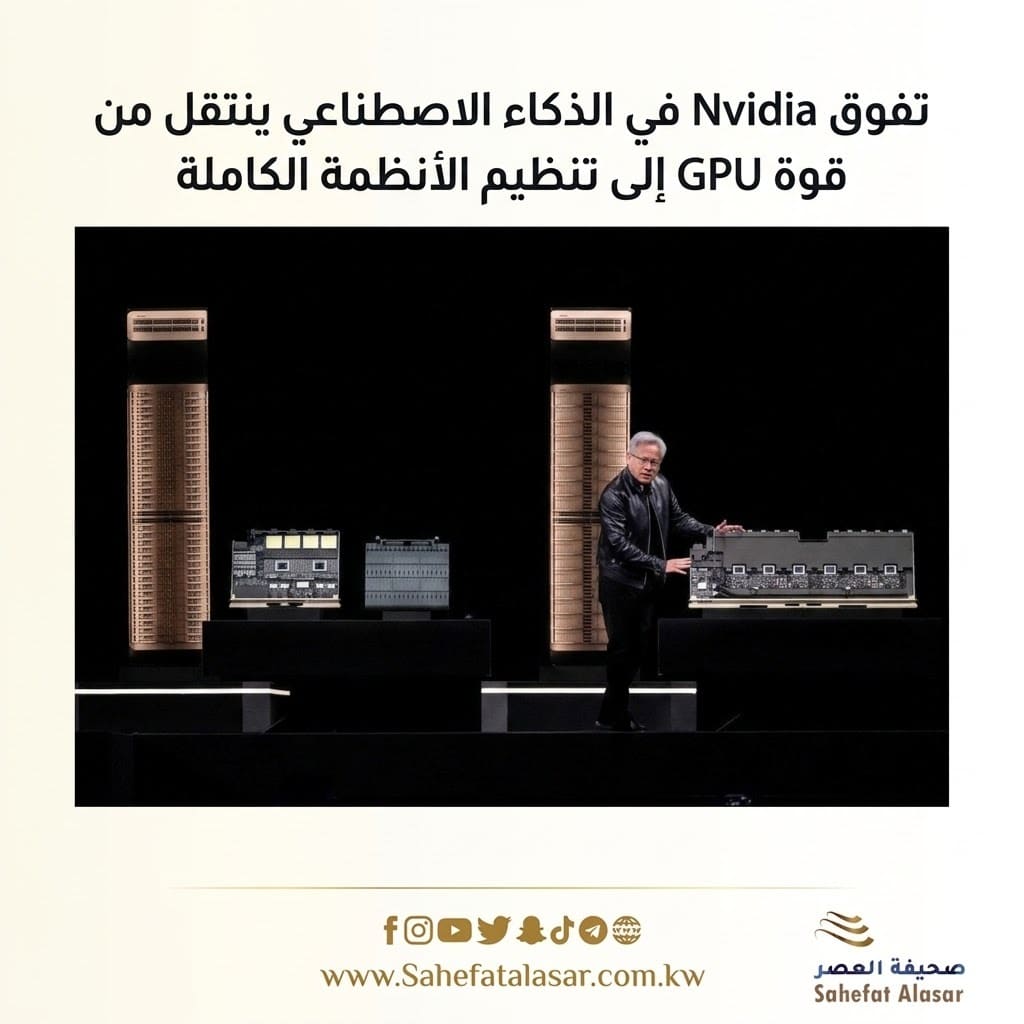
Nvidia's AI dominance moves from GPU power to organizing entire systems..
For much of the AI boom, Nvidia’s story was simple: it sold the best GPUs when others had little to offer. Now, with cloud computing giants like Amazon and Google developing their own accelerators, and after Nvidia’s market capitalization increased nearly tenfold from early 2023 to mid-2025, the company’s stock has been performing more subdued as investors have grown concerned about competition in the GPU space.
But following this week’s earnings results, a different narrative emerges: Nvidia’s enduring advantage is increasingly concentrated in the systems surrounding the GPU itself. As AI operations expand into gigawatt-powered data centers, optimizing operations—moving data efficiently and maintaining full rack throughput—has become just as challenging as achieving raw FLOPS performance.
Nvidia's Vera Rubin architecture relies on pairing the Rubin GPU with specialized components such as the Vera CPU, the Groq 3 LPX inference accelerator, and compatible storage and networking. These components are not "extra GPUs"; rather, they are specifically designed to ensure that nothing outside the GPU becomes a performance bottleneck.